History and specs of Apple II 8 bit computers
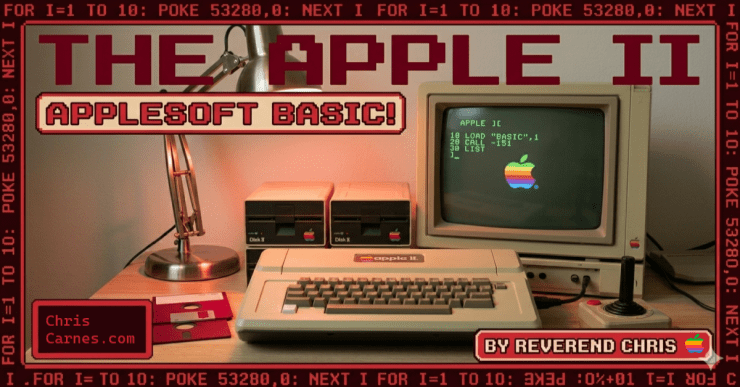
Originally called ‘Integer Basic’ this BASIC was written by Steve Wozniak himself to use on the Apple I & II computers. This is the first basic I actually trained on.
Specs are listed for the Apple II & //e (the one I used)
| manufacturer | Apple Computer |
| model numbers | Apple II, IIe, IIc, IIgs |
| years on sale | 1977-1993 [all] , 1983-1993 [//e] |
| price (new) at launch | (US) $1,298 [II], $1,395 [//e] |
| price in today’s (2026) money | (US) $7,072, $4,624 [//e] |
| CPU / speed | 6502 / 1.023 MHz [II & IIe] |
| RAM / ROM | 64K/16K |
| sound | Built-in speaker; 1-bit toggling |
| colors | 16 |
| screen size (text) | 40 x 24 |
| graphics mode (hor x vert x colors) | 40x48x16, 280x192x6 |
| OS | Integer & Applesoft BASIC, Apple DOS, ProDOS |
When I started using an Apple IIe in 1984, I had already been writing BASIC programs on the Commodore Vic-20. Moving to a 40 column display on a real monitor (even if it was green) was an amazing experience coming from the terrible 22×23 display of the Vic.
As I program on Apple BASIC now, I am starting to see some limitations. It is still very usable, but there are a few issues. One big issue is the old Apple II’s only had uppercase letters. I wrote a subroutine to change upper to lower case, but that is an extra piece of code that is not needed on a more modern basic like QB64.
I have fond memories of coding on the Apple IIe in both BASIC & the 6502 assembler machine languages. After I get my adventure game running I am going to move my code to a more modern BASIC language like Quick Basic.
All of my code is my own. No AI has generated any of it. I am not opposed to ‘vibe coding‘ with Claude for different needs, but I will never ask an AI to write my BASIC code for me.